
Manufacturing is one of our three specialties, and the quote is where we like to start. It is the first time anyone writes down what a job really involves. If that record is accurate and complete, engineering, purchasing and the shop floor begin with facts instead of guesses, and nobody has to rebuild the story from an email thread.
Where quoting slows down in a growing shop
Quoting rarely fails in one dramatic way. It fails through a string of small delays. A request for quote sits in a shared inbox because nobody owns it. A salesperson waits on engineering to confirm a material grade. An estimator rebuilds a price from scratch because a similar job from last year is buried somewhere on a shared drive.
Meanwhile the buyer is collecting other bids. The shop that answers first with a clear, credible number often wins the conversation. For a shop competing for work along the Ship Channel or around the Pasadena and Baytown plants, response speed and pricing accuracy matter about as much as the final figure.
None of this means your estimators are doing a bad job. It usually means the process grew faster than the tools around it. The rules are sound; they just live in too many places.
- Pricing logic stored in one person's spreadsheet
- Material and labor rates current in some files but stale in others
- Discounts granted with no record of who approved them
- No quick way to find a similar quote from the past
- Won quotes retyped into a job or work order by hand
Quoting software that runs on your pricing rules
Good quoting software for a Houston shop begins with the way you already price work. We sit down with your estimators and write out the rules they carry in their heads: how material is costed, how hours are estimated for each operation, which coatings, tests or certifications add cost, and where margin targets sit for different customers and product lines.
Those rules become part of the system. A salesperson picks a product family, enters dimensions and options, and the estimate assembles itself from current rates. Estimators still review anything unusual, but they spend their day on the difficult jobs rather than retyping the routine ones.
When a rate changes, someone with the right role updates it once. Every new quote uses the new figure, while older quotes keep a record of the rates they were built on. That way you can explain any price long after it was sent, even if steel or labor costs have moved since.
- 1 RFQ received
- 2 Estimate built
- 3 Approval if needed
- 4 Quote sent
- 5 Won quote becomes a job
Estimating for engineered and one-off work
Not every job fits a configurator. Engineered-to-order equipment, repairs and one-off fabrication need an estimator's judgment. For that kind of work, the system gives estimators a structured worksheet: line items for material, operations, outside processing and freight, with notes and attachments sitting beside the numbers they explain.
Drawings, customer specs and RFQ documents attach to the quote instead of hiding in someone's email. Where it saves real effort, AI can read an incoming RFQ and draft the line items or pull out the key requirements for an estimator to check. A person always confirms the numbers before anything reaches the customer.
- Templates for common job types and operations
- Search past quotes by customer, part number or material
- Outside processing and freight kept as separate lines
- Full revision history on every quote
✕Pricing rules kept in one estimator's spreadsheet
✓Rates, options and margins stored in one shared system
✕RFQs sitting unowned in a shared inbox
✓Each request logged with an owner and a due date
✕Discounts agreed verbally with no record
✓Approval rules route exceptions and record the decision
✕Old quotes buried in folders and email
✓Past quotes searchable by customer, part and material
✕Won quotes retyped into the job system
✓Won quotes create the job and work orders directly
Approvals, margins and discount control
Margin leaks quietly when discounts are agreed in a hallway. With approval rules built into the quote, anything below a set margin or above a set value goes to the right manager before it is sent. The manager sees the cost breakdown, the requested discount and the reason behind it, then approves or sends it back with a comment.
Every approval is recorded. Later, when someone asks why a customer received a certain price, the answer is on the quote itself: who approved it, when and why. Leaders can review margin by customer, product line or salesperson without assembling a report from exports, and spot the accounts where pricing keeps drifting down.
From won quote to job without retyping
A quote is the first full description of a job, and when it is won that description should carry forward. In the quoting software we build, marking a quote as won can create the job record, the work orders and the purchasing requirements, with drawings and customer notes already attached.
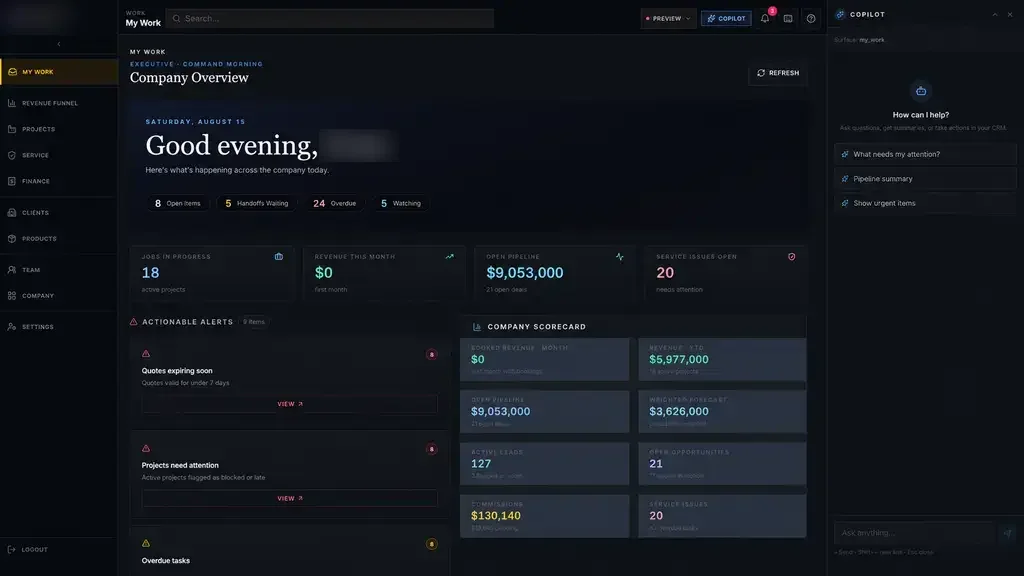
Our Industrial Operations Platform is built on this idea. It is a quote-to-service operating system for a private industrial company, following each job from the first inquiry to the quote, then on to engineering, purchasing, production, installation and service, so leaders manage by exception instead of chasing status. You do not need the whole platform to benefit from the pattern. Connecting the quote to the job is often the most valuable first step.
If you already run an ERP or accounting package, we connect quotes to it where the vendor's APIs or integration options allow. The ERP can stay the home for accounting and inventory while the quoting tool handles the pricing work it was never designed for.
The system handles
- Applying current rates and margins
- Routing quotes for approval
- Creating jobs from won quotes
Your people decide
- Pricing engineered work
- Approving discounts
- Customer negotiations
How we build quoting tools with your estimators
Every project follows five steps: Discover, Design, Build, Launch, Optimize. In Discovery we review recent quotes with your estimators and sales staff, including the ones that went wrong or lost money. In Design you see the screens and the pricing logic laid out before any code is written.
We begin with a focused first release, usually one product family or one type of job. You test working software during Build using real quotes, which is the quickest way to catch a rule that was missed. The code and data are yours, and coverage extends to more products once the first release has earned your team's trust.