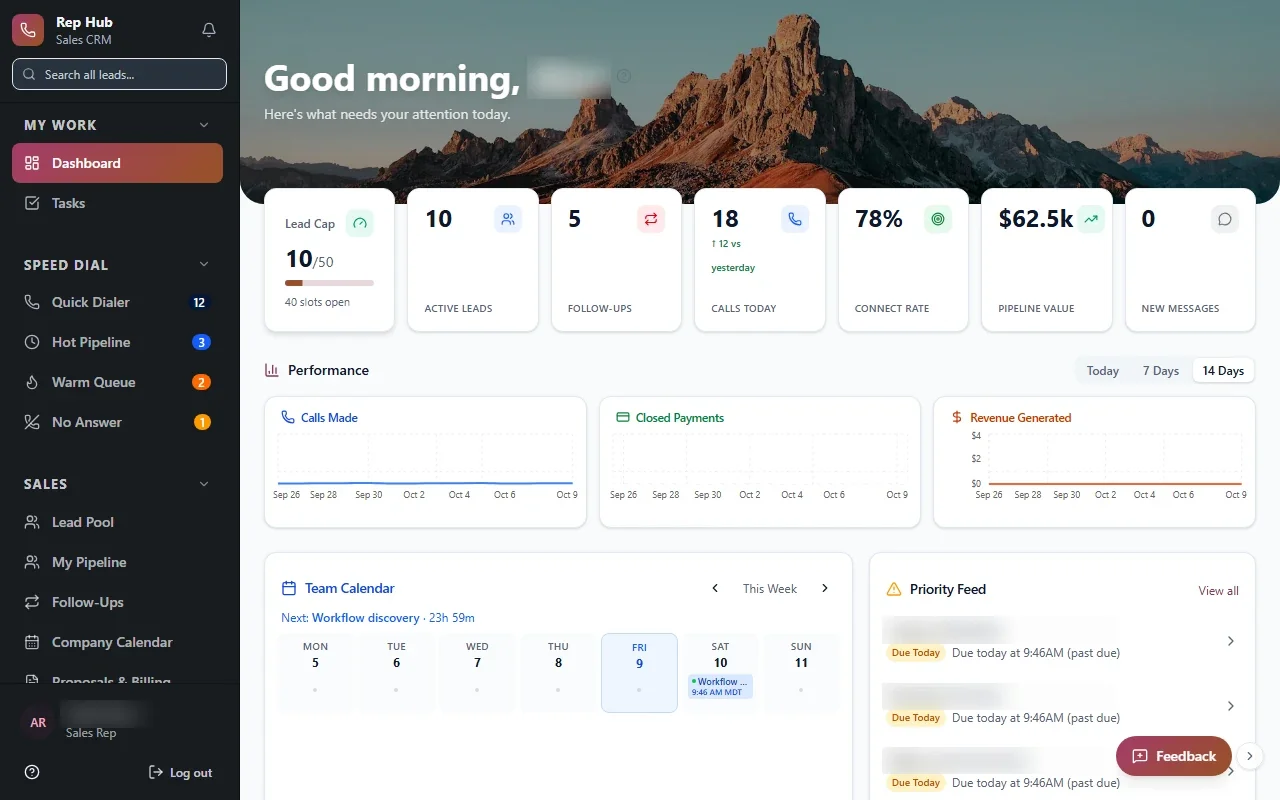

That can be one useful tool for a single team or a system that connects every department. Either way, the goal is the same. Every handoff has a clear next step, and everyone can see who owns it.
We are a software company in Houston with a specialty in healthcare administration, where we do custom healthcare software development for intake, referrals and reporting, built for full HIPAA compliance. The same approach fits energy services, logistics, construction and professional services work.
Custom vs off-the-shelf software: an honest comparison
Off-the-shelf software is the right answer more often than a software company might admit. If a product does what you need, your team likes using it and the workarounds are small, keep it. You get updates and support without carrying the cost of building.
Custom software earns its place when the gaps start costing you. Your team keeps a spreadsheet beside the system because the system cannot hold what they need. Three tools hold three versions of the same customer. The process that sets you apart is the one no product supports.
Most of the time the answer is a mix. We keep the tools that work, build the part that is missing and connect them where the vendor's APIs or integration options allow. Good custom software development often means building less than you expected.
- Off-the-shelf fits: common processes, standard reports, small teams with simple handoffs
- Custom fits: work that crosses departments, rules unique to your business, data scattered across tools
- A mix fits: a solid core product plus the workflow it cannot handle
- Warning sign: staff keep a shadow spreadsheet to know what is really happening
What a custom system looks like in practice
A good custom system starts with the work, not the screens. We look at who does what, which records they touch and what has to be true before the next step can start.
Our Industrial Operations Platform is a useful picture. It follows one digital thread from inquiry and quote through engineering, purchasing, production, shipping and installation, then into asset records and service. Each handoff is a recorded change of state, so leadership sees exceptions, like a quote about to expire, material running late or a site that is not ready, along with the owner and the next action. Most CRMs stop at Closed Won. This one starts there.
Your version might be much smaller. The pattern holds: one connected record, a workspace for each role and rules that move work forward.
- Workspaces for each role, showing only the work each person owns
- One record for customers, jobs, documents and history
- Approvals, holds and reminders that run once conditions are met
- Reports built from the same records your team works in
- 1 Understand the work
- 2 Map the system
- 3 Build the first release
- 4 Use it for real
- 5 Extend it
Where custom software fits Houston work
Houston runs on work that crosses many hands. A job in the Energy Corridor moves from bid to field crew to invoice. A container at the Port of Houston passes between brokers, drayage and warehouse staff. A referral at a medical office travels from fax to coordinator to scheduling.
Off-the-shelf products tend to cover one of those hands well and leave the gaps between them to email and spreadsheets. That gap is where custom software development for Houston companies usually pays off: one record that follows the work, with the next owner named at every step.
✕A shadow spreadsheet tracks what the system cannot hold
✓Everything your team tracks lives in one shared record
✕Staff retype the same details into three tools
✓Details are entered once and flow where they are needed
✕Checking status means calling someone or opening several systems
✓Each record shows its stage, owner and next step
✕Handoffs between departments run on email and memory
✓Handoffs are recorded state changes with a named owner
✕Leadership hears about problems after they are already late
✓Exceptions surface early, with the owner and next action
How we choose your first release
We never start by building everything. A first release is the smallest piece of software that removes a real problem and gets used every day. It is working software your team relies on, not a prototype that sits in a demo folder.
To find it, we map where work slows down or gets lost, then test each candidate against a few plain questions.
For a construction firm, the first release might be the handoff from estimating to project setup. For a practice administrator, it might be the intake queue. Later releases extend the same system to the next team instead of starting a new one.
- How often does this problem happen, and who feels it?
- Can we fix it without first rebuilding everything around it?
- Will people use it daily, so we learn quickly what works?
- Does it create a foundation the next release can build on?
- Will we be able to tell clearly whether it helped?
How a custom software development project runs
Our process has five stages: Discover, Design, Build, Launch and Optimize. Each one ends with something you can review.
Seeing the software during Build matters most. Problems are cheaper to fix when someone on your team spots them early, and the people who will use the system help shape it.
- Discover: we watch the work, talk to the people doing it and agree on the first release
- Design: we map the records, roles and rules, and sketch the key screens with your team
- Build: you see and test working software as it takes shape, not only at the end
- Launch: we move real work into the system and support your team through the switch
- Optimize: we refine what people use and plan the next release
The system handles
- Assigning the next step
- Reminders and follow-ups
- Status updates between teams
Your people decide
- Judgement calls and approvals
- Customer conversations
- Exceptions that need a person
You own the code and the data
When we finish, the software is yours. You own the source code and every record in it. We document how the system works, how it is hosted and how the rules are set, so another team could pick it up if you ever needed them to.
That matters for any business planning to be around for a while. Your operations should not depend on a vendor you cannot leave.
Ownership is part of how we approach custom software development for Houston businesses, from the first release onward. It is written into the agreement, not offered later as an extra.
Choosing a software development company in Houston
Houston businesses have plenty of options, from large agencies to solo freelancers. Whichever custom software development company in Houston you talk to, ask a few direct questions before you sign.
Working locally helps with the parts of discovery that go best in person: sitting with a dispatcher in Pasadena, walking a fabrication shop floor or watching a front desk near the Texas Medical Center handle a busy morning.
- Will they show you working software during the build?
- Who owns the code and data at the end?
- How do they decide what goes in the first release?
- What happens if the original developer is unavailable?