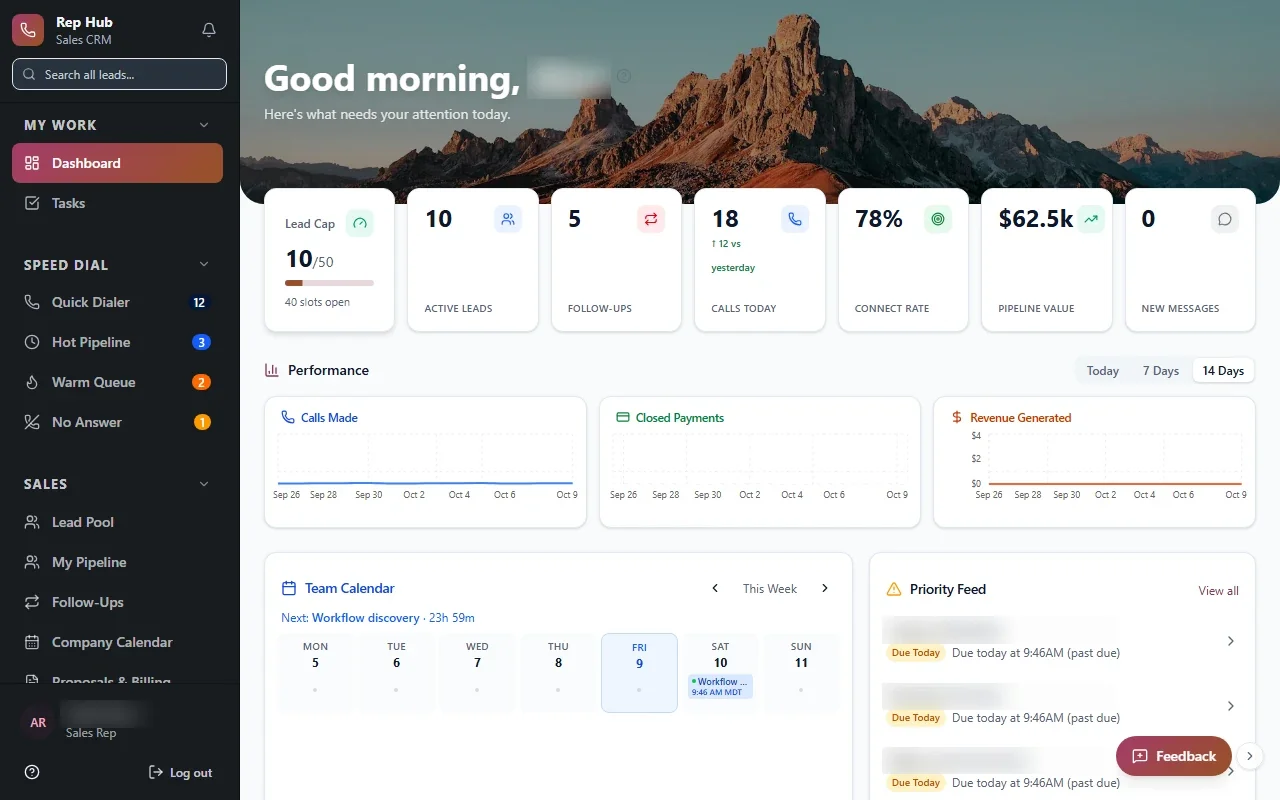

Bayou Thread Systems builds proposal software for Houston sales teams, with contracts and e-signature in the same flow, all shaped around your own pricing and terms. Reps build accurate proposals in a few steps, customers sign online, and once the deal is signed and paid, delivery and commissions start on their own.
The trouble with copied proposal documents
A proposal built from an old file carries old mistakes. Last quarter's price, a discount someone forgot to remove, the wrong customer name in the footer. Each one costs credibility, and some cost money.
Copying also hides what is happening, and it gets worse as a team adds reps who each keep their own favorite version. Managers cannot see which proposals are out, which were opened and which are stuck waiting for approval. When the customer finally signs, someone has to rekey the scope into the system that schedules the work.
- Prices and terms vary from rep to rep
- Discounts go out without approval
- Nobody knows whether the customer opened the proposal
- Signed scope gets retyped by delivery or finance
Proposals built from your pricing rules
We start with how you price. Products, packages, options, labor, minimums and discount limits become rules the proposal builder follows, so every rep produces a proposal that matches your current price book.
Reps choose what the customer needs, answer a few questions and watch the total update as they go. Your branding, terms and required disclosures are added automatically. If a rep needs a discount beyond their limit, the proposal goes to a manager before it can be sent.
For a Houston contractor, proposal software might offer choices of materials, a site-visit fee and financing terms, all calculated the same way no matter which rep builds the quote.
- 1 Proposal built
- 2 Approved
- 3 Sent and viewed
- 4 Signed and paid
- 5 Delivery starts
Contracts and e-signature in the same flow
When the customer says yes, the accepted proposal becomes the contract. Scope, price and terms carry over exactly, so what the customer signs matches what they were offered.
Customers sign online from a phone or computer. Signatures are captured either through your current e-signature provider, connected through its API where available, or with signing built into the platform. Each signed document is stored with its history: who sent it, when it was viewed and when it was signed.
Payment can follow right away. A deposit or first payment collected through your payment processor completes the deal and moves it to the next stage.
Contract versions are handled carefully. If terms change after a proposal is sent, the customer receives a new version and the old one is marked as replaced, so nobody signs an outdated document. Your standard clauses live in one library, and only the people you choose can edit them.
✕Reps copy last month's proposal and edit it by hand
✓Proposals are built from your current price book
✕Discounts go out before anyone approves them
✓Discounts over a rep's limit route to a manager
✕Nobody knows if the customer opened the proposal
✓Sent, viewed and signed status recorded for each one
✕Contracts are printed, signed and scanned back
✓Customers sign online and the copy is stored
✕Delivery retypes the scope from a forwarded email
✓Signed scope arrives on the delivery task automatically
Signed and paid starts the next step
This is where most proposal software stops, and where ours keeps going for Houston teams. In Rep Hub, the sales platform we built, a contract that is signed and paid triggers delivery and commissions automatically. The delivery team receives the customer and scope, and the rep's commission is tied to the real deal.
We bring that same pattern to your team. The moment a deal is complete, the system can create the onboarding or install task, notify the right people, send the customer a clear next step and record the commission event. No handoff email is needed.
- Delivery or install task created with the full scope attached
- Customer receives a welcome message explaining what happens next
- Commission event recorded against the signed and paid deal
- Finance sees the payment and contract in one record
Tracking proposals and approvals
With proposal software in place, Houston managers get a live list of every proposal: drafted, sent, viewed, awaiting approval, signed and paid. Proposals that have gone quiet stand out, and the rep can be prompted to follow up.
Approval rules are written once and applied every time, for example discounts above a set level, nonstandard terms or unusually large orders. Approvers can review on their phones, and every approval is recorded with the reason. Over time that record shows which discounts actually helped close deals and which simply gave away margin. A sales manager near the Galleria and an owner working from The Woodlands see the same pipeline.
The system handles
- Applying pricing rules
- Routing discount approvals
- Starting delivery after payment
Your people decide
- Setting prices and terms
- Approving exceptions
- Customer conversations
How a proposal software project runs
Our work follows our five stages, from Discover through Optimize. Early on we gather a handful of your real proposals and contracts, including the messy ones, and map your pricing and approval rules. The first release usually covers the proposal builder, e-signature and the signed and paid handoff.
During Build, reps create test proposals for real scenarios and your managers check the math. Edge cases get special attention: a customer who wants two options side by side, a change order after signing, a deposit that fails and needs a second attempt. Connections to your CRM, accounting, payment processor and e-signature tools are built where the vendor's APIs or integration options allow. The code, the templates and every signed record stay yours.